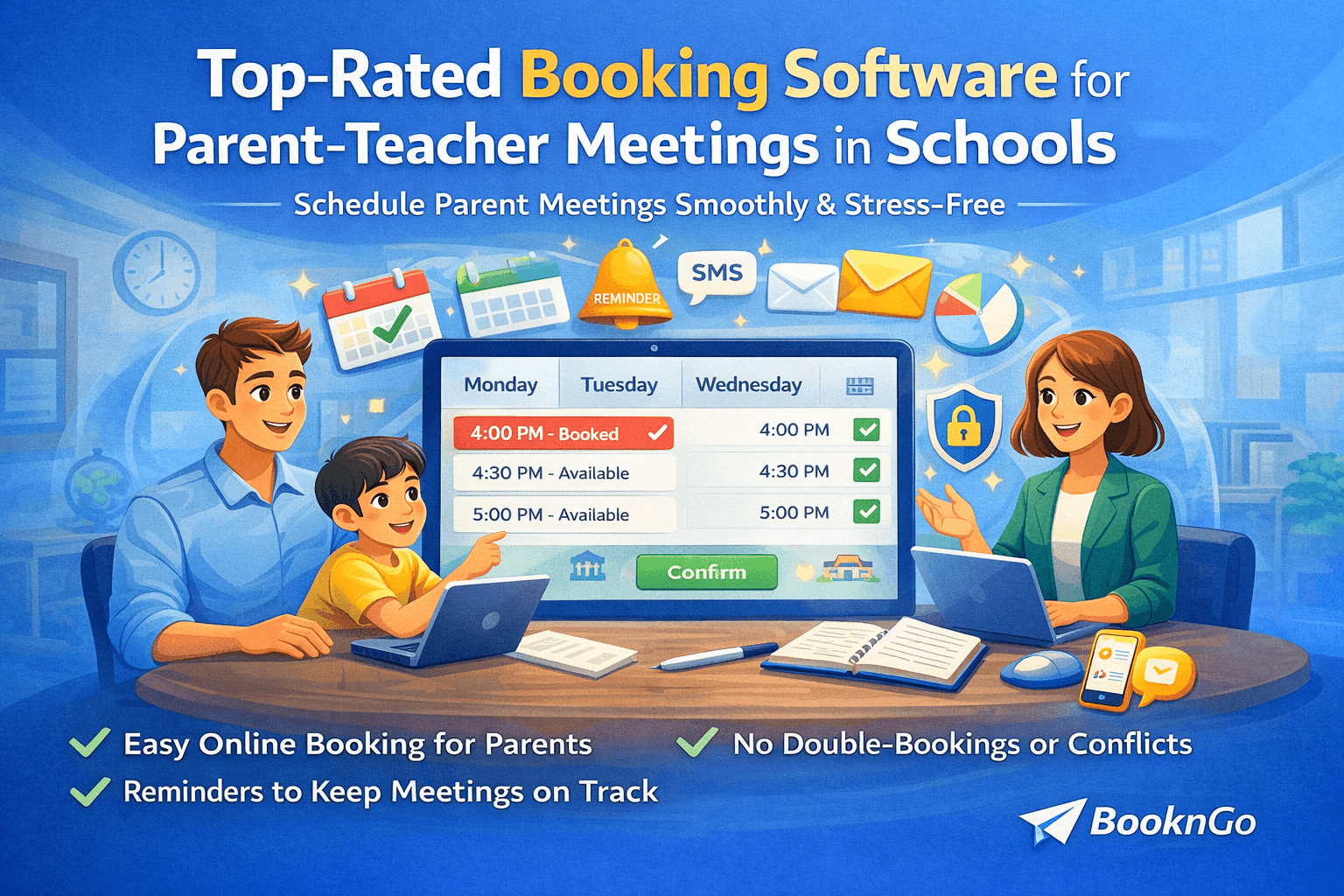
Parent-teacher meetings look simple on paper. Pick a date. Invite parents. Talk about the child. In reality, however, they are logistical puzzles wearing polite smiles. Calendars collide, teachers juggle multiple classes, parents squeeze meetings between work calls, and administrators hope no one gets double-booked.
The right appointment scheduler software for schools does not just manage time. It protects relationships. When scheduling works, conversations begin on time, teachers feel respected, and parents arrive less stressed and more present.
Common Mistakes Schools Make When Scheduling Parent-Teacher Meetings: The Need for Appointment Scheduler Software for Schools
Even well-run schools stumble when it comes to scheduling. Not because they do not care, but because systems are often built piecemeal over time. What starts as a quick workaround slowly becomes the default. Using multiple disparate tools not only increases admin work but also makes scheduling more complex and inefficient. These common mistakes show up every term, usually in small ways that feel manageable until they are not:
Using too many disconnected tools
One platform for sign-ups, another for room assignments, and a third for tracking attendance. The result is fragmented information and avoidable confusion.
Overbooking teachers without buffer time
Back-to-back meetings look efficient on paper but leave no room for delays, emotional conversations, or quick resets between parents.
Ignoring facility capacity and availability
Scheduling meetings without confirming room size, privacy, or accessibility creates last-minute scrambling that reflects poorly on the school.
Relying on manual confirmations
When staff have to confirm or update bookings one by one, errors multiply quietly and accountability becomes unclear.
Assuming all parents are equally tech-comfortable
Complex booking flows discourage participation. If parents struggle to book, they may disengage entirely.
Treating scheduling as an afterthought
Parent-teacher meetings are relationship-building moments. When logistics feel rushed or messy, it affects how conversations begin.
Every small friction adds up. The right appointment scheduler software for schools, paired with facility booking and facility management software, removes these pressure points before they reach people.
Top Scheduling Software for Parent-Teacher Conferences
Below is a curated look at the top-rated booking software options for parent-teacher meetings.
1. BooknGo
BooknGo stands out as the most practical choice for parent-teacher meeting scheduling because it understands how schools actually operate. Not just how they are supposed to operate in theory. It also covers broader needs like facility booking and facility management software. This means schools are not forced to stitch together multiple systems just to run one meeting smoothly.
What makes BooknGo number one is not an overload of features. It is restraint. Parents can book available time slots online without endless back-and-forth emails. Teachers can control availability based on teaching load and preparation time. Administrators can oversee schedules without micromanaging every appointment. Time conflicts are automatically prevented, no awkward apologies required.
BooknGo respects the reality that schools run on limited time and limited budgets. It is affordable, scalable, and flexible enough to support both small schools and larger institutions juggling hundreds of meetings.
2. Calendly for Education
Calendly often appears on best-of lists because it is widely recognized and easy to use. For schools already using it in some capacity, it can function as a basic solution for parent-teacher meetings. Parents book slots. Teachers set availability. The mechanics are clean.
However, Calendly was not built with schools in mind. It lacks native features for facility booking or integrated facility management software. Schools may find themselves relying on manual workarounds when multiple teachers, rooms, or shared spaces are involved.
Calendly is best suited for smaller schools or individual teachers who need a simple scheduling layer and already have other systems handling room assignments.
3. Setmore
Setmore appeals to schools that need a budget-friendly option with a gentle learning curve. It supports appointment scheduling, notifications, and basic staff calendars. For parent-teacher meetings, Setmore can handle the essentials. Parents book time slots. Teachers confirm availability. Reminders help reduce no-shows.
That said, Setmore is closer to a general service scheduler than a true appointment scheduler software for schools. Facility booking capabilities are limited, and administrators may need to manage room logistics separately. Setmore works best when meetings are simple and physical space is not a major concern.
4. SimplyBook
SimplyBook offers extensive customization, which can be both a strength and a burden. Schools can tailor booking pages, adjust rules, and create structured flows for parent-teacher meetings.
For institutions with technical support or a dedicated admin team, this flexibility can be appealing. For others, it may feel like too much steering for a system meant to reduce work. Facility booking is possible but requires configuration. Facility management software functions are not as seamless as platforms built specifically for education.
5. Microsoft Bookings
Schools already using Microsoft 365 often explore Microsoft Bookings as an extension of their existing tools. Integration with Outlook calendars is smooth, and teachers familiar with Microsoft products may adapt quickly.
Microsoft Bookings can handle parent-teacher meeting schedules reliably. However, its focus is individual appointments rather than school-wide logistics. Facility booking and facility management software capabilities are limited and not purpose-built for educational workflows. It is best used as part of a broader Microsoft ecosystem, not as a standalone solution for school operations.
Preparing for Parent-Teacher Meetings
Parent-teacher conferences serve not only as a bridge for communication between parents and teachers but also as a vital component in supporting a child's growth. To ensure each parent-teacher meeting is efficient and productive, both parents and teachers should prepare in advance.
Parents can have an open conversation with their child before the meeting to understand their academic progress, daily life, and emotional well-being at school, gathering relevant homework, report cards, and teacher feedback. Preparing a list of topics to discuss during the conference—such as academic progress, classroom behavior, and social relationships—helps keep the meeting focused.
Through thorough preparation, parents and teachers can communicate more effectively during the meeting, jointly develop practical growth plans for the child, and turn every parent-teacher conference into an opportunity to advance the child's development.
What schools should look for in parent-teacher meeting booking software
Choosing scheduling software is less about chasing features and more about understanding friction. Where do things usually break down?
1. Parent Accessibility
Parents should be able to book appointments without needing excessive tutorials or follow-up emails. We should help them feel comfortable with tech. If booking feels confusing from the beginning, engagement drops. An intuitive booking page and website integration enable parents to schedule appointments seamlessly, significantly enhancing the experience.
2. Teacher Autonomy
Teachers need control over their time. Good software allows them to open, close, or adjust slots without administrative bottlenecks.
3. Conflict Prevention
Double bookings damage trust. Automated checks protect everyone from awkward corrections.
4. Facility Awareness
Meeting rooms matter. Software that integrates facility booking avoids last-minute scrambles and hallway negotiations. Integrated video conferencing tools also support remote meetings, enhancing flexibility.
5. Administrative Visibility
Admins need oversight without manual micromanagement. Clear dashboards save hours behind the scenes. Progress reports provide administrators with greater transparency and communication efficiency.
Overall, schools should develop a clear plan when selecting and implementing scheduling software to ensure continuous optimization and efficient utilization.
Scheduling as a Form of Student Care
Parent-teacher meetings are not just administrative touchpoints. Effective scheduling supports the well being and development of students and children by ensuring that every child receives the attention and support they need. Again, they are moments of alignment between home and school. When scheduling is smooth, conversations can focus on growth, support, and understanding, helping students and children achieve greater success.
Choosing the right booking software is not a technical decision alone. It is a cultural one. Open communication between parents and educators is essential for tracking a child's progress and success, as it allows both parties to address concerns and celebrate achievements together.
BooknGo understands this balance. Collaboration between school and parents supports a child's overall development, ensuring that every child benefits from a supportive environment. That is why it earns its place as the top-rated choice for schools looking to manage parent-teacher meetings with clarity, respect, and ease.
Because when time is handled well, people show up better.
See how BooknGo works for schools. Book a demo or start your free trial today.